Web DevelopmentBy WebMosaic Ventures · 18 Jun, 2026
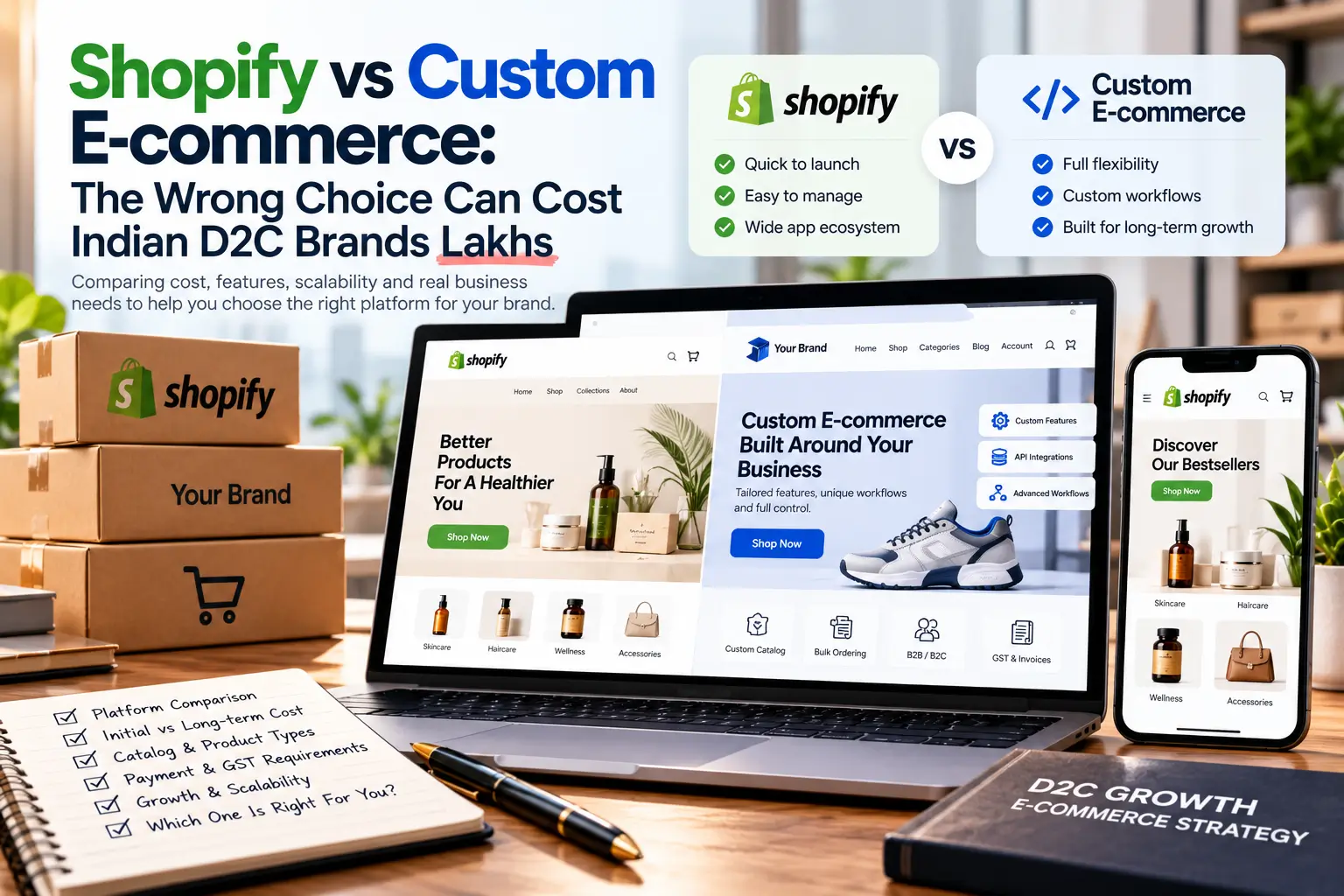
Shopify vs Custom E-commerce: The Wrong Choice Can Cost Indian D2C Brands Lakhs
Every D2C founder eventually asks the same question: Shopify or a custom e-commerce build? The internet gives confident answers on both sides, but most of them ignore the founder's actual situation. The wrong choice does not fail on day one. It shows up months later as rising app costs, painful workarounds, or a rebuild that could have been avoided.
Shopify is a strong choice for many brands. It gets a store live quickly, has a clean admin, and suits standard catalogs and checkout flows. For a brand testing a product or launching fast, it is often the sensible option. The risk appears when the business grows and needs behaviour that the standard platform does not support without stacking paid apps.
Custom e-commerce, on platforms such as Bagisto or a Next.js and Node.js build, gives control over pricing rules, product structures, order workflows, and integrations. It can be the better long-term system for complex catalogs, B2B and B2C combined stores, or businesses with special operations. The risk is over-building: paying for custom development when a simple platform would have done the job.
The real decision depends on a few things that are specific to your business: how complex your catalog and pricing are, how much your workflow differs from a standard store, how you handle payments, GST, shipping, and COD, how much you expect to grow, and who will manage the store daily. Two brands in the same category can end up with opposite answers.
Cost is where most comparisons mislead. Shopify looks cheaper at launch, but subscriptions, apps, and transaction charges add up over time. Custom looks expensive at the start but can reduce dependency on third-party tools later. Comparing only the launch quote leads to poor decisions. What matters is the total cost over two or three years for your specific setup.
Performance and SEO depend on execution more than platform. A Shopify store overloaded with apps can be slow, and a badly built custom store can be worse. This is why the person or team building the store matters as much as the platform they choose.
Indian requirements add another layer: Razorpay and other gateways, GST-compliant invoices, courier integrations, COD handling, and regional logistics. Each option can support these, but the setup effort and long-term complexity differ. This is exactly the kind of detail that should be checked before choosing, not after launch.
At WebMosaic Ventures, we build both Shopify stores and custom e-commerce platforms, so our recommendation is not tied to one platform. We look at your catalog, workflow, budget, and growth plan, then suggest the option that makes sense, including telling you when a simple Shopify setup is enough.
That planning conversation is the most valuable part of the project. A short review before development starts can save a brand months of rework and a large part of its budget.
Share your product type, expected catalog size, and current sales channels with us. We will suggest the platform, scope, and approach that fit your business and budget.
Confused between Shopify and a custom e-commerce build?
WebMosaic Ventures reviews your catalog, workflow, and budget and recommends the right platform, whether that is Shopify, Bagisto, or a custom build.
Get My E-commerce Plan ReviewedThe true entrepreneur is a doer, not a dreamer.
- Kevin HooksRecent Posts
Work With WebMosaic
If this article matches a challenge you are facing right now, our team can set up, optimise, or redesign the system for you.
Book Strategy Call